The Conclusion on Agarwood (OUD): Why Hydro Distillation is Superior For Agarwood Oil
For agarwood, hydro distillation is generally considered the better option, although theoretically both hydro distillation and steam distillation can be used. The preference for hydro distillation stems from agarwood's unique chemical and physical properties and its different responses to heat, water, and fermentation.
Here's a detailed explanation:
1. The Unique Properties of Agarwood Resin
Agarwood (Aquilaria spp.) is a dense, resinous wood formed by fungal or microbial infection. Its resin contains a complex mixture of compounds, including sesquiterpenes (such as linalool, β-spathulenol, and 7-epi-γ-eudesmol) and chromones, many of which are less volatile and heavier than those found in some lighter flowers or herbs.
These heavier molecules require longer heating and direct contact with water for effective release, conditions that water distillation effectively provides.
2. Advantages of Hydro Distillation for Agarwood Extraction
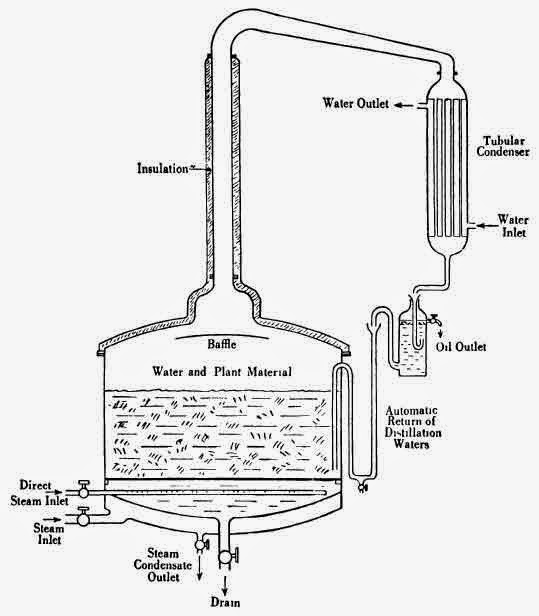
Water distillation involves soaking agarwood powder or small wood chips in water and boiling it for several days. This direct contact with water:
Softens the wood fibers, allowing the resinous compounds trapped within to be released.
Promotes a slight hydrolysis reaction, subtly altering certain compounds and deepening the aroma of the agarwood oil.
It creates a richer, more complex aroma characteristic of traditional agarwood oil, including earthy, woody, and animalic notes.
Traditional producers in regions like Cambodia, Vietnam, and India have long relied on water distillation because this method extracts the rich, full-bodied agarwood oil that matures over time.
3. Limitations of Steam Distillation for Agarwood Extraction
Steam distillation is cleaner and faster, but it's less suitable for extracting agarwood because:
Steam can only penetrate the wood and cannot completely permeate it; therefore, the resin trapped deep within the wood may not be fully released.
This method typically yields a lighter, less robust agarwood oil, lacking the rich aroma prized by high-quality agarwood.
Because agarwood oil has low volatility, steam distillation alone is insufficient to effectively extract all its compounds.
4. Why does hydro distillation usually produce higher-quality agarwood oil?
It produces a richer, more complete aroma, encompassing both high and low notes.
Because of the longer contact time with water and heat, more oil can be extracted from the same amount of raw material.
The long distillation process allows the natural fermentation residues in the soaked agarwood powder to impart a unique shed or animalistic aroma to the agarwood oil, often a highly valued element in traditional agarwood flavor.
The resulting agarwood oil ages better, developing a softer, more complex aroma over time.
5. When is steam distillation a better choice?
Hydro distillation typically uses soaked and fermented agarwood, which produces a strong shed aroma. Some producers or perfumers may prefer unfermented, purer agarwood oil, dominated by the natural woody or medicinal aromas of the wood. This can be achieved through steam distillation if done correctly.
Furthermore, temperature and pressure control are crucial. I have seen agarwood oils produced using sub-boiling-point, low-pressure, long-duration simmering time. These oils have a fresher, cleaner, and brighter top note with a moderate woody aroma.
Agarwood oils obtained through high-temperature, high-pressure distillation tend to have a burnt aroma and a more limited fragrance profile.
However, if done correctly, they can also be of very high quality. With the right equipment and skillful techniques, we can produce high-quality steam-distilled agarwood oil.
6. Summary: Comparison of Agarwood Hydro Distillation and Steam Distillation
Aspect | Hydro distillation | Steam Distillation |
Extraction efficiency for agarwood | High | Medium |
Aroma quality | Deep, complex, long-lasting | Lighter, cleaner but less character |
Yield | High | Low |
Traditional use | Widely used in agarwood oil production | Rarely used for agarwood |
Suitable for | Resinous woods | Flowers and herbs |
Conclusion:
Hydro distillation is the preferred traditional method for extracting agarwood essential oil because it extracts a wider range of aromatic compounds, thus enhancing the complexity and depth of the essential oil. While steam distillation is cleaner, it cannot capture the rich, aged aroma unique to true agarwood essential oil.
Orange Blossom Essential Oil Extraction Processv
Comprehensive Applications of Patchouli Essentia
Soxhlet Extractor
Contact: Project Manager
Phone: +86-18120438367
Tel: +86-18120438367
Email: info@tycoretech.com
Add: No. 1, Optics Valley Avenue, East Lake New Technology Development Zone, Wuhan, Hubei, China
We chat






 English


